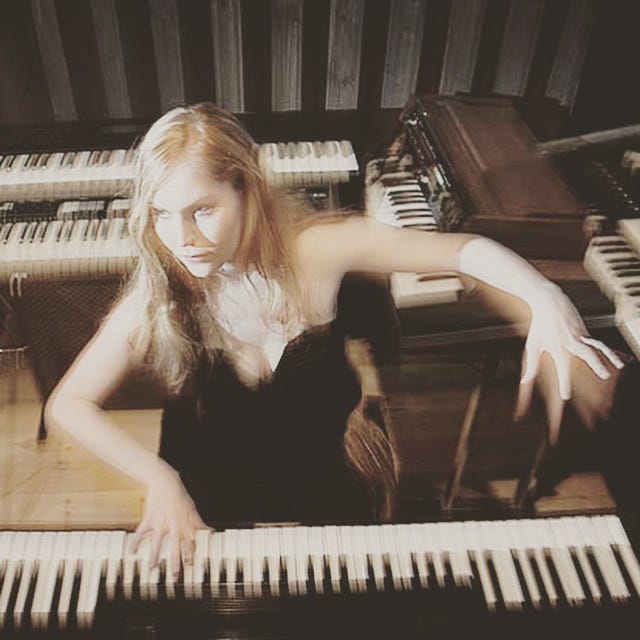
On Astrid Junior
A Letter to My Great Aunt about Me

Dear Astrid,
My great aunt, I think I have to tell about myself. I have to stop assuming you already know. Because no one in their right mind would write letters and just focus on telling the receiver of the letter about their life. Almost no one would write letters to a dead woman either. At least, she would not send them. If this is to be a letter to you, I need to give something of myself.
About your life you already know. You lived it and then you died and the stories of your life evaporated. Although my parent held on to snippets and passed them to me one by one. The exercise I embark on is something different and as I put you together post-life, I cannot erase my entanglement.
To you I am a stranger, the daughter of your nephew’s child.
I was born in the unglamorous year of 1982, after the stardust of your life had settled. I am the pathetic little girl in the picture below. On the day of the picture my parent is in the mental institution, locked up for Christmas. In the morning I have unwrapped the most beautiful doll from a gift package from my grandparents. Then my mother and I have made our way to her sister’s house. Somewhere, where Christmas has arrived — although it has forgotten us.
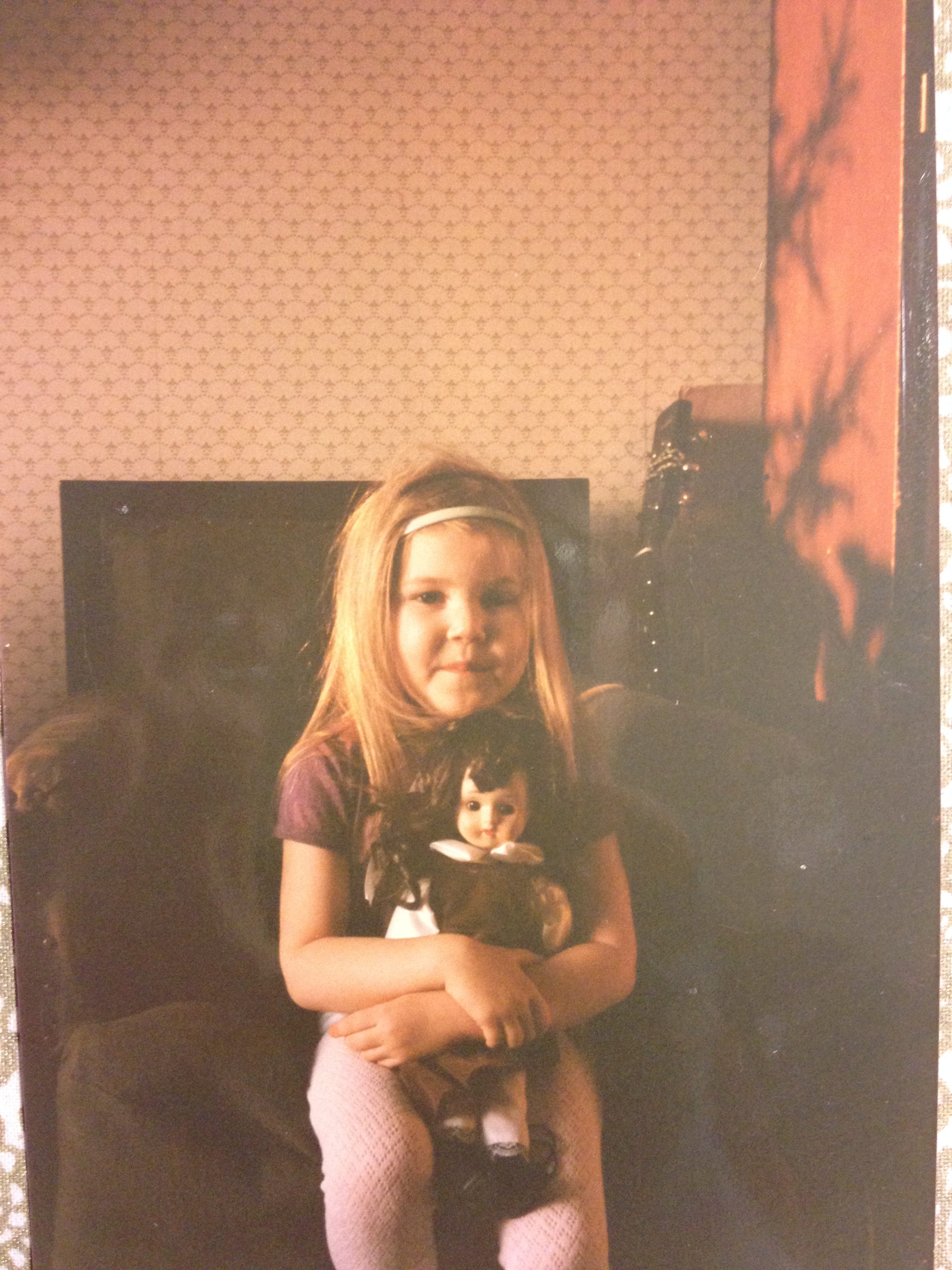
I ache with grief and the fragility of the porcelain doll in my lap is a perfect metaphor for my state. I love her, yet, I’ll accidentally break her feet many times and they’ll be glued back together with the kind of sloppy care that has been given to my hair in this picture.
Now, in 2025, my childhood is sepia like yours. It is long-gone. Like the pictures I’ve been posting in these letter of you. The way I tell my life is not the way I would have worded it before. You must be familiar with the silence. It wafted in like smoke from the Eastern sky, slow and muffling. It guaranteed no view of the horizon, no perspective. It provided the cover of confusion and an imposing question crafted from fog: is what you are experiencing really happening?
Silence about the generations before, about my grandparents and their lives turned into silence about what was happening in my home and then into silence about my lived experience. As if there was no connection between our generations, as if we weren’t a chain linked to each other whether we knew it or not.
This expressionless suffering protected the perpetrators, those loved ones who inflicted pain on others.
For a long time, I believed silence was a polite way of protecting myself. But it was a lie. Fear had sewn my lips shut. I wasn’t protecting myself. I was guarding the equilibrium: things would stay exactly as they were. I wanted the love of my parents and others close to me. It was difficult to maintain or earn. I think I had earned it but I guessed it would be taken away if I spoke.
And even if love would not have been taken away, I knew from experience that when I spoke it would not matter. I would not be received. My experiences could be made to seem so small as not to exist. As not to be true at all. Fear of not being heard was even larger than not being loved. They were in fact the same thing.
Good Girl
So my dear Aunt, I became a Good Girl. I was studious, hard-working, sarcastic, wise beyond my years and endlessly creative. I was polite and independent, a master at ignoring what was in front of me, crashing over me and destroying me.
How did I feel?
Auntie Astrid, that was a ridiculous question. No one ever asked me that.
I was determined to live and to leave this home. Make a spectacle out of me.
Emotions were best used in poetry and song. Elsewhere they could not be trusted.
And who was I to center my feelings?
My parents had had it much harder, and their parents went through war. So if they had been broken — as they had, there was a legitimacy to their madness.
Trauma narratives flickered everywhere. They glowed in gaslight.
I was almost lucky, it seemed.
No one had laid their hands on me.
Yet, I was not untouched.
I was not without trauma.
I lived in permanent terror.
I knew shit that only girls who have been molested know. Who knows why.
I had the keys to the other side, the upside down world from where Alice never returned. Where perpetrators and their innocent victims all look the same.
I was damaged goods.
And if you were anywhere in those days, my great aunt, you were not with me. I did not have your silverware or the story of your life. I did not have your blue performance dress nor your ability to take space and turn almost anything into the best bite ever if dipped in butter.
Good girls don’t tell stories.
So my goodness did not last.
Surviving
I feel bad telling you all this, Astrid. It is not for you to do anything about.
Besides, what do I know about what you went through? Not much.
Your drunk father drowned in a river when you were thirteen. Your saintly mother stayed with you almost until the end of your life. You travelled the world with Kerttu and were a woman loving lady at a time on this Earth when it was not a thing one advertised.
One student of yours has told me how you advised her never to trust men.
She deduced that you had been burned by someone.
Who was it? What did you base this on? On the behavior of your father or the behavior of the man who got your sister pregnant and then disappeared? Or someone else?
In the precarious home I grew up in, it was best to avoid conflict, to report the weather of others before they even knew what was coming. It was useful to minimize my reactions. It was the ripples of storms passed, of wars past. I was saved by school on Mondays, I was saved by the acting I could do sliding into the world outside my home. Yet, I had to be careful not to crack my constructed exterior. And I was. My liberation from inter-generational harm was poetic until it wasn’t. I’ll tell you more another day.
But if there’s something we know Astrid it must be the elixir of music, the sweet retaliation of not breaking entirely and blooming instead into melodies and rhythm — the sonation of it all and the liberty accessible that way. And it seems entirely possible to tell stories and tell them differently. It is possible to write new songs and stories and use language where it used to not belong. I am still not sturdy, but I am willing to try anyway.