
Dear Astrid
Letters to my great aunt, pianist Astrid Joutseno (1899-1962)

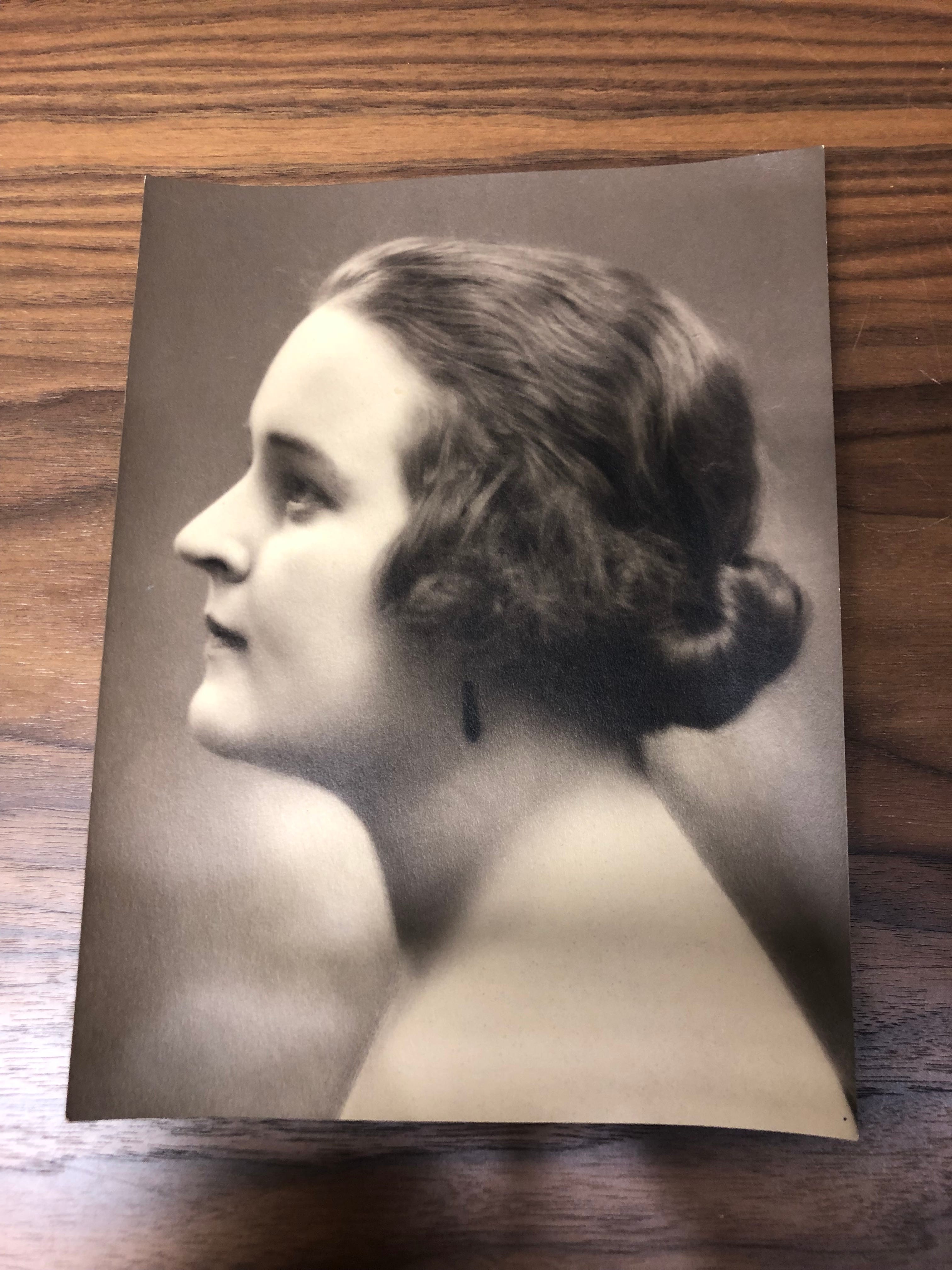
Dear Astrid,
My name is Astrid Joutseno. I inherited my name from you, but we have never met. You are my great aunt; my grandfather’s young aunt, just 16 years older than him.
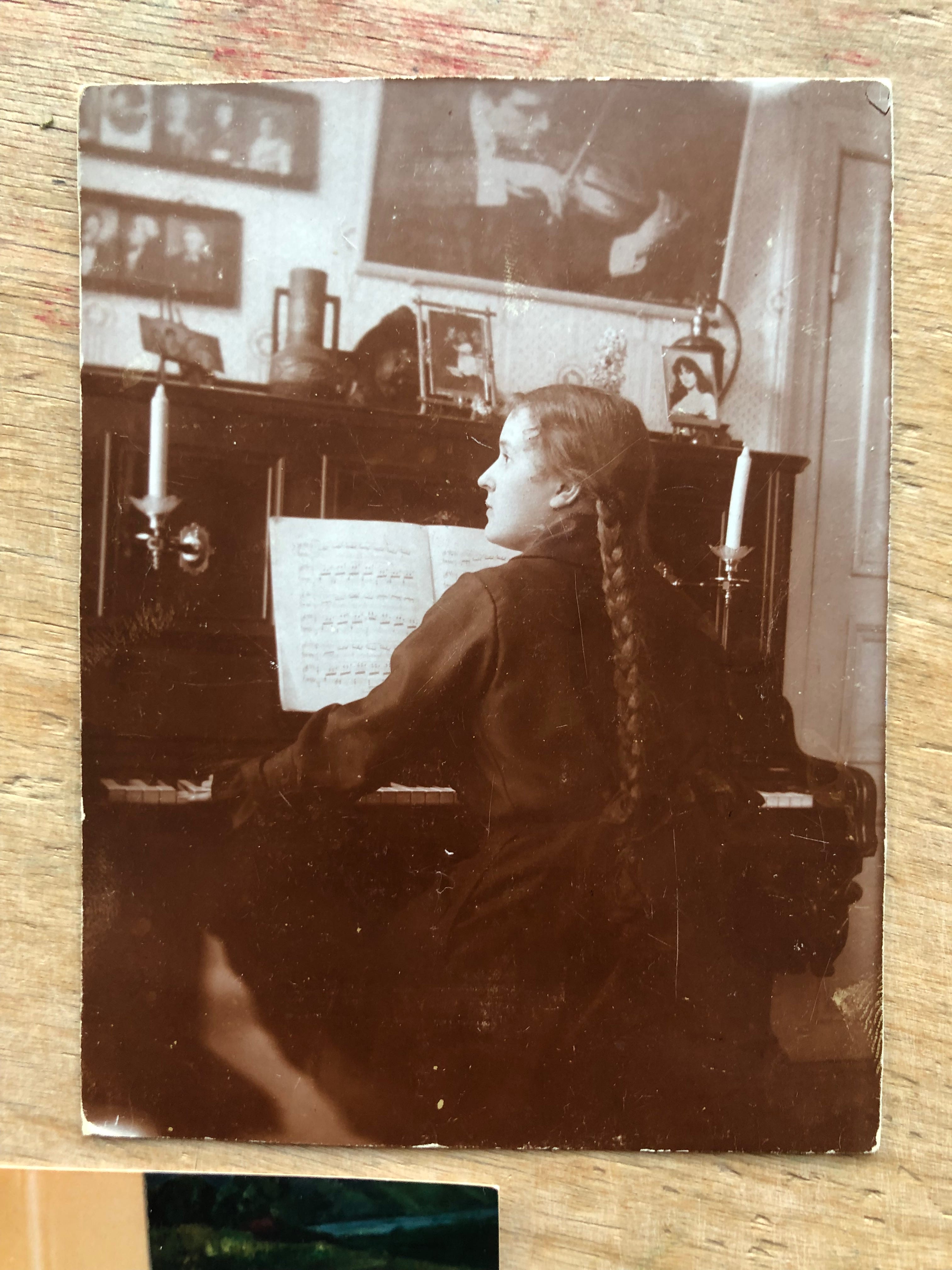
You died 20 years before I was born in 1962.
I am a musician and a songwriter. For a pop career I translated my name into Astrid Swan in the late 1990s. So that is also who I am. During the last 20 years I have written and published 7 albums internationally and become a Doctor of Philosophy from Gender Studies, pursued a researcher’s life, published research articles internationally and a memoir and a novel in Finnish (Viimeinen kirjani, 2019; Noitarakastaja 2024).
In my memoir Viimeinen kirjani, I wrote a little chapter about you and Kerttu, because I was worried I would die (from metastatic breast cancer) before I had time to look for you in more detail. Since then, I’ve had more time to write and to look for clues about who you were. I have published two articles about you and your partner Kerttu Wanne, violinist and author.1
This is my first letter to you.
In writing to you Astrid, I hope to get to know you. Because I don’t know what shape this research project is taking in the long run (a book?), I write in letter-form, noting hesitations and asking questions.
There is an archive, Kerttu Wanne archive in Turku at the Sibelius Museum. It is my main source for piecing together your life as a pianist and a piano pedagogue as well as a queer woman in the first half of the 20th Century. Then there are some family heirlooms, a picture here, a silver spoon there. But what can they tell me?
As you can see, I will be touching on archival research, European queer history of the 20th Century, women’s musicianship and artistry, and Polish Jewish ancestry. I will be using words that were not uttered when you lived and I’ll be looking for the expressions that did exist.
Most of all, I’ll be writing through the yearning for connection. Asking what it is to share so much –– to be stitched together across time. This might be an impossible narrative to glue back together. Some kind of story of grief generationally passed on as if a smashed-to-pieces vase –– as story and as trauma. Yet, it might be a delight. I’ll find out.
From writing to Astrid to writing your life (and others’)
For as long as I can remember, I have been interested in how lives and selves are written or inscribed.2 It started with The Diaries of Sylvia Plath as a teenager. Although I have read Plath biographies obsessively through the decades and pondered on the questions that arise when telling the lives of others, I have never attempted to piece together someone else’s life. I have found it strange and almost counter-intuitive. I do not imagine it possible to piece together a person from random fragments. I cannot pretend to know how it feels to be someone else. I worry about the disconnect between a person’s own voice and other’s interpretations. And when there is no voice, I worry more.
Still, I have arrived some place, where the kinds of questions I want to ask, require the telling of another’s life. A new aspect of life writing for me. The life I’ll be writing is yours, Astrid. And Kerttu’s, the genius and love of your life.
I think it might happen that Kerttu will try to shine her brightness all over your story. We won’t stop her. Not this time, and not when you lived. You reside in her archive, and in newspaper and magazine interviews you gladly played the role of an admirer, the gatherer of stories that would reveal to all, how great an artist she was.
As if you two weren’t enough, I desire to include another person: my search for my great grandfather Eliasz Dobrzyniec. He has been missing from my family narrative since 1914, when he left Turku before ever meeting his child, my grandfather.
I think you knew him. I know you looked for him in Poland on one of your tours. Maybe it is our destiny, as Astrids to look for him…
The Beginning
I am writing this at the Pop&Jazz Conservatory in Helsinki, waiting for my teenager to perform. Her instrument is the piano. It is also mine when I compose and perform my songs, singing. It seems that there is no end to our music, it is a wide river running through with ease, despite time and distance.
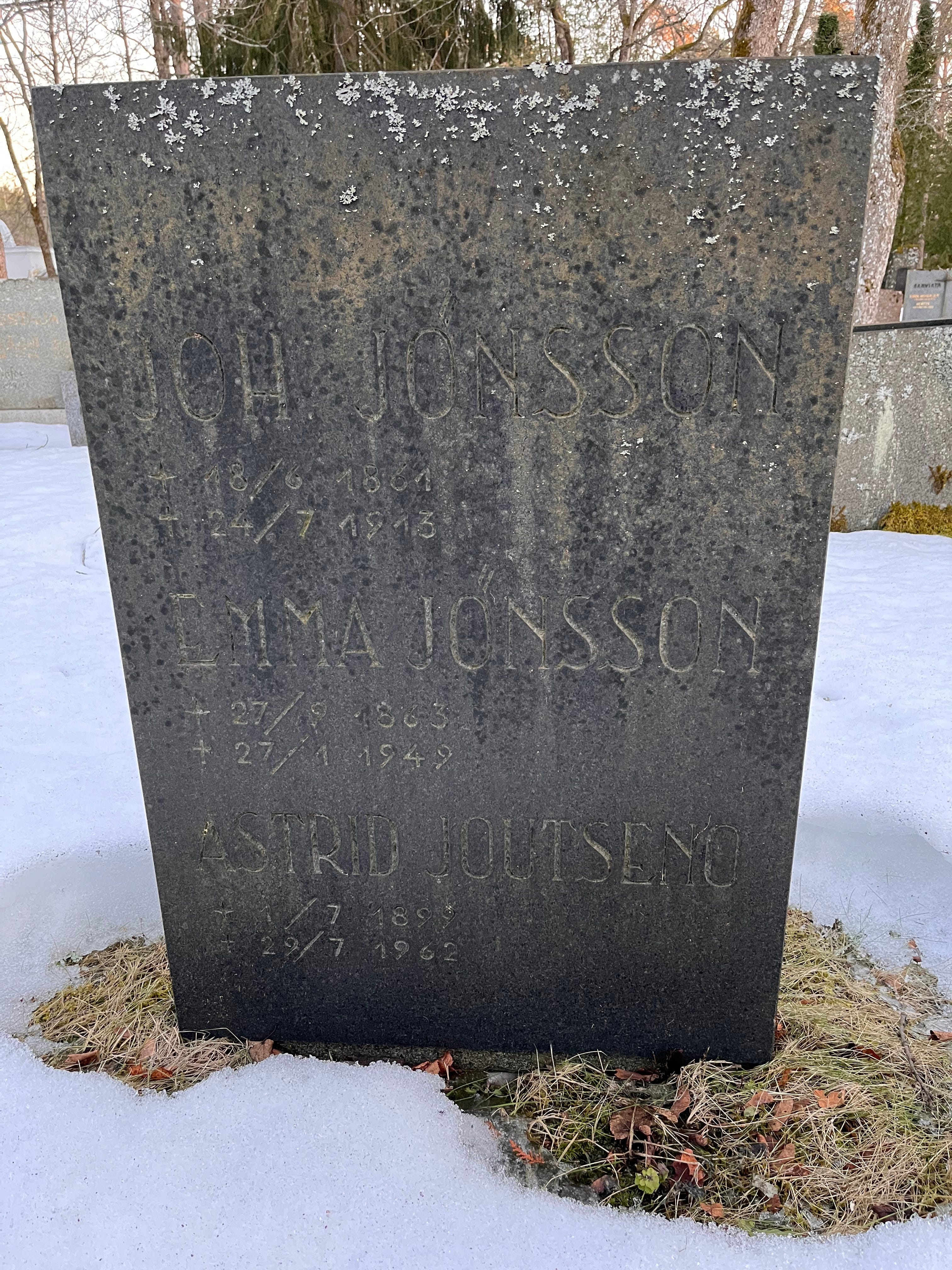
When you died in the summer of 1962, you had been ill for some time. You were buried in the grave where your mother and father were waiting. Your other nine siblings were laid to rest someplace else, some of them as children and some after you, in their own family lots. You lost your father at 14 and your mother at 50. Dying at 63, you were a woman with a life. Seeing your name under your parents’, makes me think you were a special one to them. You stayed close to the bone. You were a source of pride, an artist. Yet, you were also different. Not married to a man. Your maiden name was switched from Jönsson to Joutseno in 1905 when the children of the family all took up a Finnish last name, but your parents did not.
On July 29th, 1962 Kerttu lost you. It was a grief she did not survive.
Astrid Joutseno (1899-1962)
Astrid Joutseno was raised in Turku, Finland. She studied the piano as a teenager and continued her studies in the 1920s and 1930s in Berlin and Paris. Joutseno taught piano in Turku, Finland when she wasn’t touring in Europe and the USA with violinist Kerttu Wanne.
Kerttu Wanne (1905-1963)
Violinist Kerttu Wanne was educated in Berlin and Paris after private training and conservatory of Helsinki, Finland. Wanne was the first woman concert master in Finland, (and possibly in Europe) when she joined Turku Symphony orchestra in 1927. Most of her career she performed in a duo with Astrid Joutseno touring Europe and the USA. In addition to concerts and recordings, Wanne published journalistic articles, poetry, aphorisms and an essay collection.
3. Eliasz Dobrzyniec/Illia Dobrzhynets (1889-1960)
Violinist, pedagogue, conductor born in Warsaw, educated in Warsaw Music Institute (1902) and St Petersburg Conservatory (1910) . Worked as concertmaster in Turku, Finland Soitannollinen seura (later Turku symphony) 1912-1914; then USSR from 1918 onwards. He worked as a pedagogue in Kharkiv Conservatory of Music (where he became a professor in the 1930s. He was the concert master in Kharkiv Opera House Orchestra and other ensembles and orchestras.
photograph of Astrid is from the Kerttu Wanne Archive in Sibelius-museo, Turku.
photograph of Astrid from a private collection.
photograph is taken by author, 2024.
Article on Astrid and Kerttu in SQS, Suomen Queer-tutkimuksen Seuran lehti:
Joutseno, A. (2024). Säveltaiteilijat kotioloissaan: Kerttu Wanne, Astrid Joutseno ja 1930-luvulla pilkahteleva outous . SQS – Suomen Queer-tutkimuksen Seuran lehti, 18(1-2), 19–38. https://doi.org/10.23980/sqs.146456
Visual essay in Tiede&Edistys:
Swan, A. (2025). Poissaolon musiikki. Tiede & edistys, 49(4), 42–51. https://doi.org/10.51809/te.154934
Smith, Sidonie & Watson, Julia. 2024. Reading Autobiography Now: An Updated Guide for Interpreting Life Narratives. Minnesota University Press, 2024.
Lee, Hermione. 2009. Biography: A Very Short Introduction. Oxford University Press.